RFSymptoms: Safety netting advice
AdultsOuter ear infection
DATE LAST REVIEWED: 05/11/2026
When to seek further review
- Contact the GP if ear pain is not improving within 2 to 3 days, or the prescribed drops are not helping.
- Seek urgent advice sooner for worsening pain, fever, redness spreading around the ear, discharge or new hearing changes.
- Severe persistent ear pain needs urgent assessment, especially with diabetes or weakened immune defences.
- Keep the ear dry and do not put cotton buds or other objects inside. Follow the instructions for prescribed drops.
- Do not wait for the suggested review time if symptoms become worse, new symptoms appear, or you are worried.
- Contact your GP when the surgery is open. If it is closed, you cannot get the help you need, or you are unsure what to do, call NHS 111. You can call even if you are not sure whether the symptoms are serious.
When to get emergency help
(Immediately dial 999 or go to your nearest Emergency Department)
- New facial drooping or weakness, particularly with speech changes or arm weakness.
- Severe headache, a stiff neck, marked drowsiness or a seizure.
- Rapidly spreading swelling with severe illness or collapse.
- Severe difficulty breathing, such as gasping or being unable to speak normally.
- New confusion or not making sense when speaking.
- Being very difficult to wake.
- Collapse or loss of consciousness.
- Blue, grey, unusually pale or blotchy skin or lips, especially when feeling very unwell.
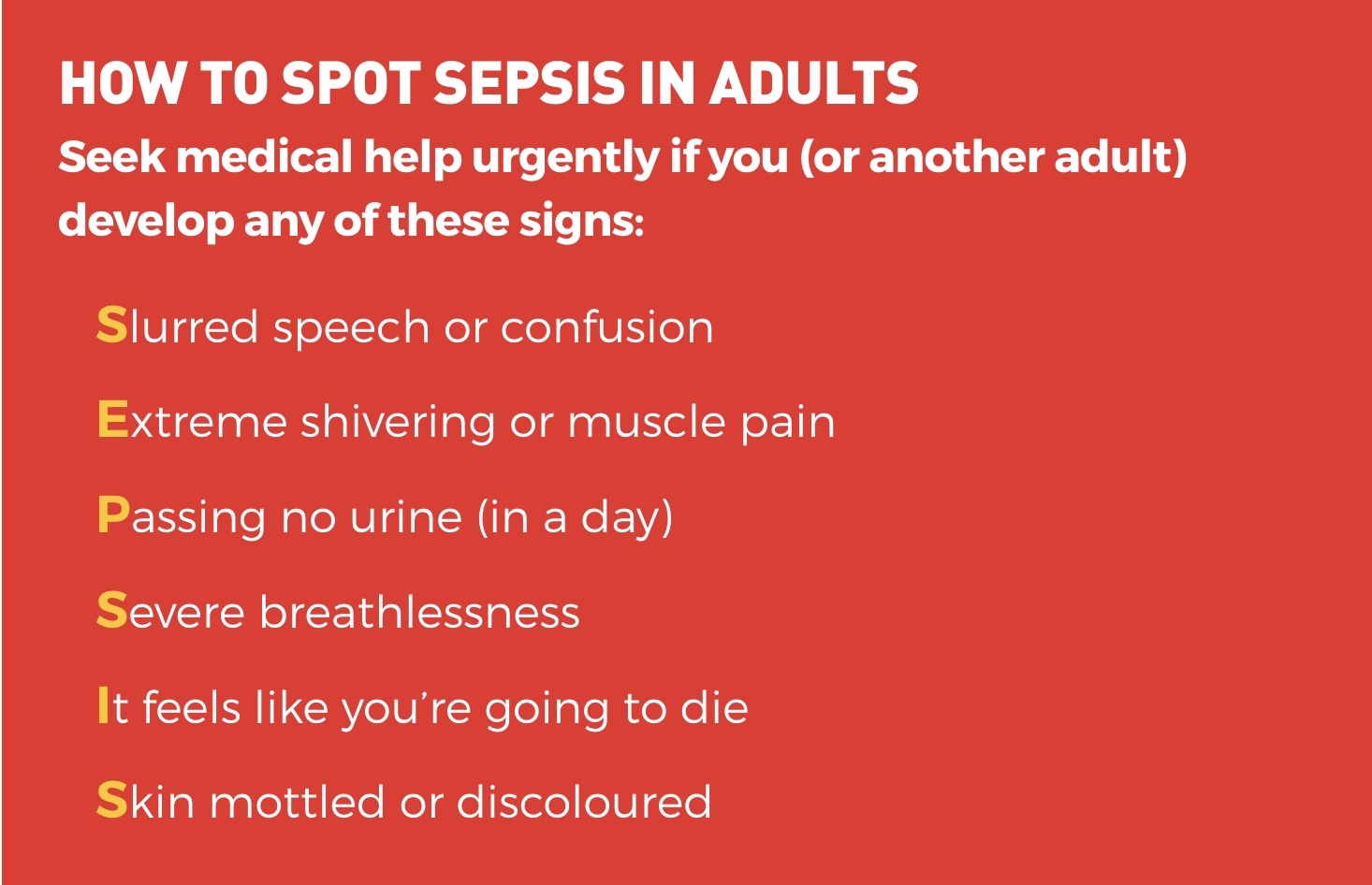
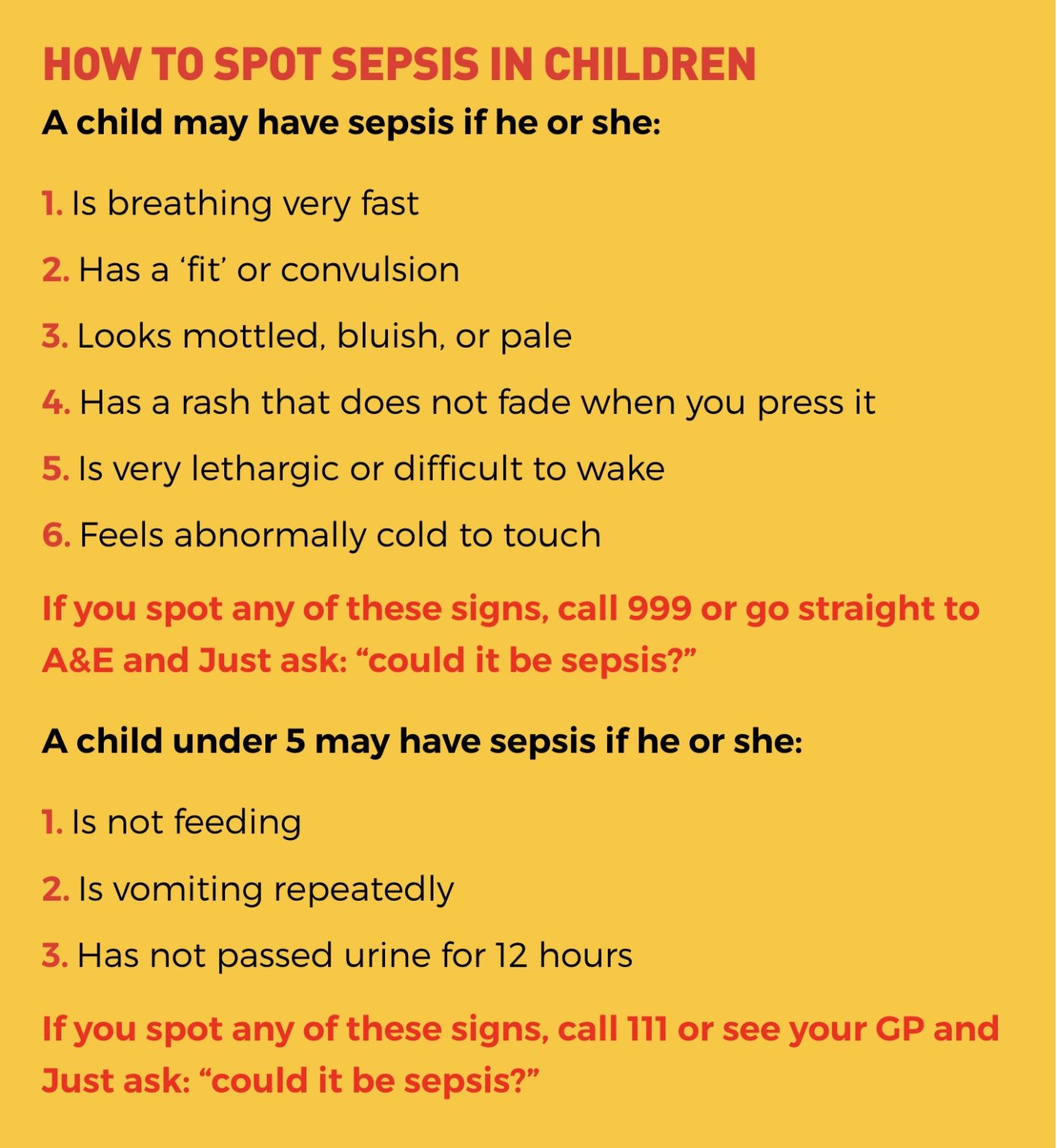
How to spot sepsis
Sepsis is a life-threatening reaction to an infection. It can get worse quickly. If someone is seriously unwell and may have sepsis, call 999 or go to your nearest Emergency Department. Do not wait for every sign, a high temperature or a rash.
An unwell child under 5 who has not had a pee or wet nappy for 12 hours needs emergency assessment. If you are unsure and there are no emergency signs, call NHS 111 for advice.