RFSymptoms: Safety netting advice
ChildrenPneumonia
DATE LAST REVIEWED: 05/11/2026
When to seek further review
- Seek review if your child has not started to improve within 3 days of treatment, or sooner if getting worse.
- Fever and breathing difficulty should usually settle within 3 to 4 days. Get advice if they persist, particularly with poor feeding, poor drinking or unusual tiredness.
- A cough can take up to 4 weeks to settle if your child is otherwise well and steadily improving. Get advice sooner if breathing or general health worsens.
- Keep the follow-up plan given by the treating clinician.
- Do not wait for the suggested review time if symptoms become worse, new symptoms appear, or you are worried.
- Contact your GP when the surgery is open. If it is closed, you cannot get the help you need, or you are unsure what to do, call NHS 111. You can call even if you are not sure whether the symptoms are serious.
When to get emergency help
(Immediately dial 999 or go to your nearest Emergency Department)
- Severe breathing difficulty, gasping or being unable to speak normally.
- Severe chest pain, collapse or new confusion.
- Coughing up more than a few streaks of blood, or blood with chest pain or breathlessness.
- Rapid worsening with cold clammy skin, marked weakness or very little pee.
- Severe difficulty breathing, pauses in breathing, grunting, or the skin pulling in deeply under or between the ribs.
- Being very difficult to wake or unresponsive.
- Being unusually floppy, confused or not responding as usual.
- Blue, grey, very pale or blotchy skin, lips or tongue.
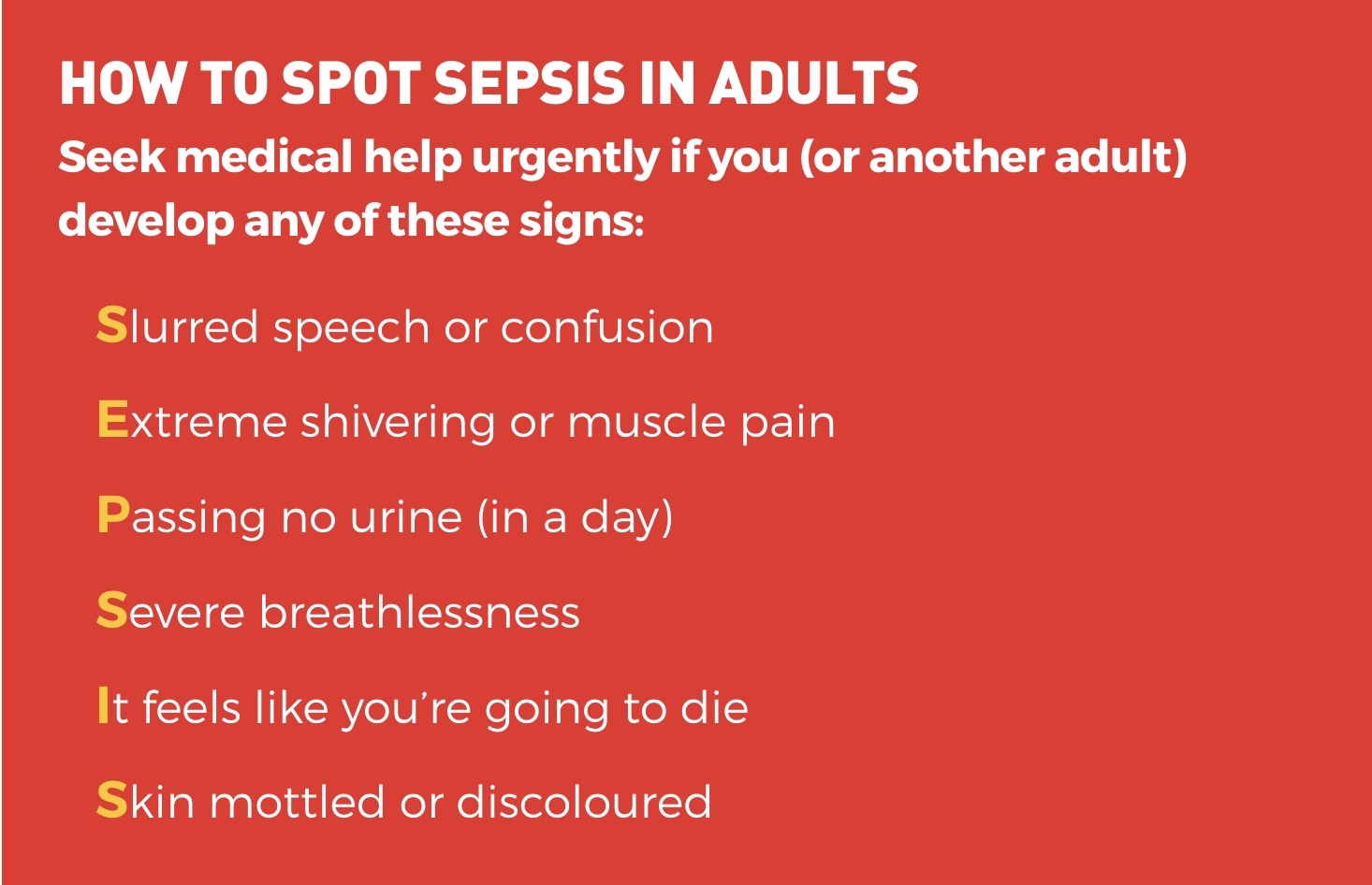
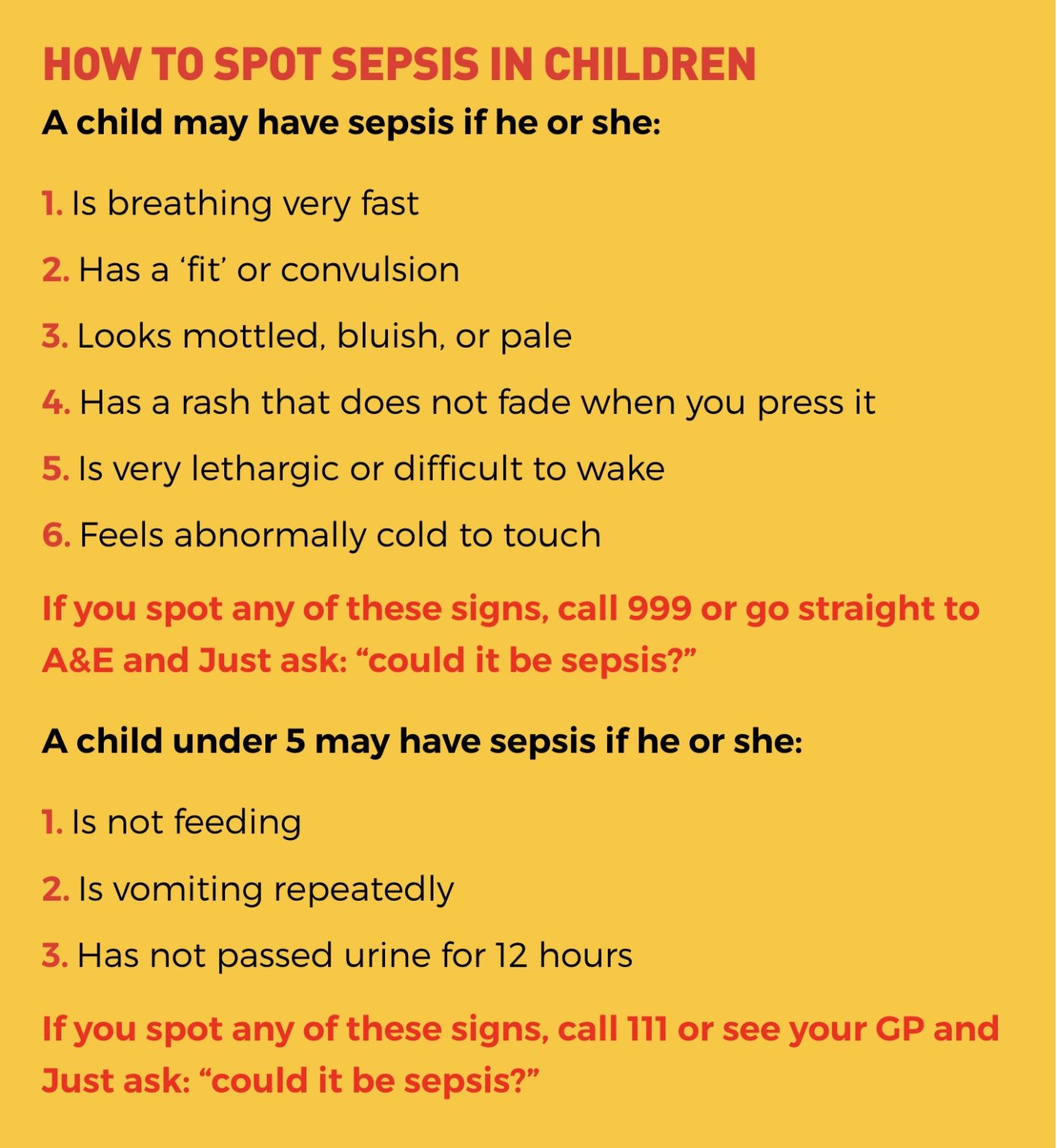
How to spot sepsis
Sepsis is a life-threatening reaction to an infection. It can get worse quickly. If someone is seriously unwell and may have sepsis, call 999 or go to your nearest Emergency Department. Do not wait for every sign, a high temperature or a rash.
An unwell child under 5 who has not had a pee or wet nappy for 12 hours needs emergency assessment. If you are unsure and there are no emergency signs, call NHS 111 for advice.